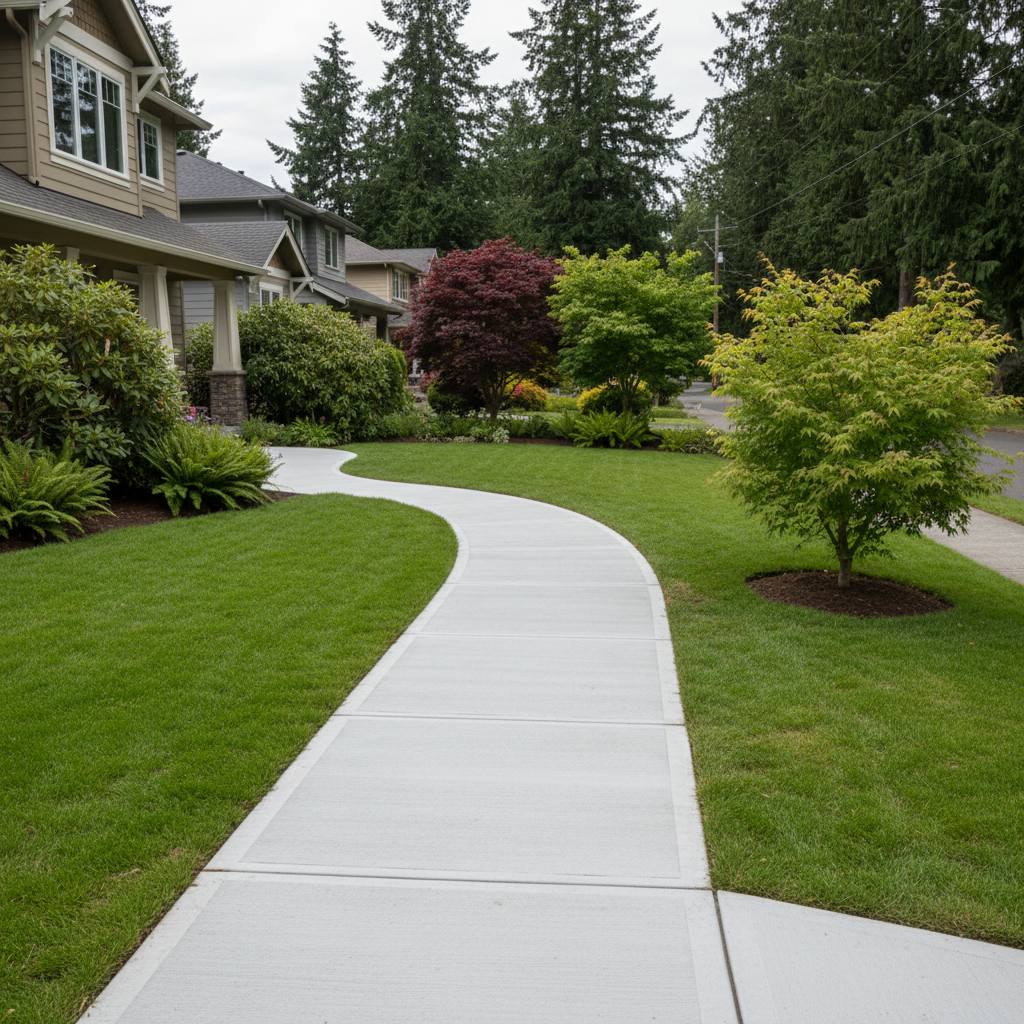
Alright, so you're thinking about putting in some new concrete sidewalks around your place here in Lynnwood. Maybe your old ones are cracked up, or you're finally connecting that back patio to the front yard. Whatever the reason, it's a solid investment, and you want it done right. As someone who's poured a lot of concrete in this town, I've seen a lot of projects go smoothly and a few that hit bumps. Let's talk about how to make sure yours is the smooth kind.
Setting Your Project Timeline: What to Expect
First off, let's talk timing. Concrete work isn't like painting a wall; it's got a few stages, and weather plays a big role, especially up here in the Pacific Northwest. You're not going to get a sidewalk poured in the middle of a January downpour, that's for sure.
Generally, from your first call to us to the final cure, here's a rough breakdown:
- Initial Contact & Estimate: This usually takes a few days to a week. We'll come out, look at your property, measure things up, and talk about what you're looking for.
- Permitting (If Needed): For sidewalks on public property or if you're doing major grading, you might need a permit from the City of Lynnwood. This can add anywhere from a couple of weeks to a month or more, depending on their workload. Don't skip this step; it can cause big headaches later.
- Scheduling the Work: Once the estimate is approved and permits are in hand, we'll get you on the schedule. Depending on the season and how busy we are, this could be a week or several weeks out. Spring and fall are usually peak times.
- The Work Itself: For a typical residential sidewalk project, the actual pouring and finishing usually takes 1-3 days. This includes prep work like excavation and forming, then the pour, and finally the finishing touches.
- Curing Time: This is crucial. While you can often walk on it after 24-48 hours, concrete needs about 7 days to reach a good percentage of its strength and 28 days to fully cure. You'll want to keep heavy vehicles off it for at least a week, preferably longer.
So, from start to finish, you're probably looking at anywhere from 3 weeks to 2 months for the whole process, depending on permitting and scheduling. Plan ahead, especially if you have an event or specific deadline in mind.
What Happens During the Concrete Sidewalk Process?
When we get started, here's what you can expect to see happening on your property:
- Site Preparation: We'll mark out the area, then excavate the existing soil or old concrete. This means digging down to the right depth, usually 4-6 inches for a sidewalk, and making sure the base is solid and properly sloped for drainage. We might bring in some gravel or crushed rock to create a stable sub-base.
- Forming: We'll set up forms, usually made of wood or metal, to create the exact shape and height of your new sidewalk. This is where precision matters for straight lines and smooth curves.
- Reinforcement: For strength and to help prevent cracking, we'll lay down rebar or wire mesh within the forms. This is like the skeleton of your sidewalk.
- Pouring: The concrete truck arrives! We'll pour the concrete into the forms, spread it evenly, and make sure it fills every corner.
- Finishing: This is where the magic happens. We'll use various tools to smooth the surface, create the desired texture (like a broom finish for grip), and cut control joints. These joints aren't cracks; they're intentional cuts that help manage where the concrete will crack naturally as it expands and contracts.
- Curing: Once the finishing is done, we'll often apply a curing compound or cover the concrete to help it cure slowly and evenly. This prevents it from drying out too fast, which can weaken it.
How to Prepare Your Property
You can help make the process smoother for everyone. Here's what I recommend:
- Clear the Area: Remove any plants, lawn ornaments, furniture, or anything else that's in the way of where the sidewalk will go.
- Mark Utilities: If you have private sprinkler lines, invisible dog fences, or other buried lines that aren't publicly marked, let us know and mark them out. We'll call 811 for public utilities, but private ones are on you.
- Access: Make sure we have clear access for our equipment and the concrete truck. Sometimes this means moving cars or clearing a path.
- Pets & Kids: Keep pets and children away from the work area, especially during the pour and initial curing. Wet concrete is messy and can be irritating.
- Water Access: We'll need access to a water spigot for mixing and cleaning.
One thing I've seen in some older Lynnwood neighborhoods, especially those with mature trees, is roots causing problems. If you've got big trees near your planned sidewalk, we'll need to assess the root situation during the estimate. Sometimes we can work around them, other times a root barrier or even root removal might be necessary.
Key Questions to Ask Before You Sign
Before you commit to any contractor, make sure you're asking the right questions. Don't be shy; it's your home and your money.
- Are you licensed, bonded, and insured in Washington State? This is non-negotiable. Ask for proof.
- Can you provide references from recent sidewalk projects? A good contractor will be happy to share.
- What's included in the estimate? Make sure it covers excavation, materials, labor, and cleanup. Are there any potential hidden costs?
- How long will the project take, from start to finish? Get a clear timeline.
- What kind of warranty do you offer on your work? You want to know they stand behind their product.
- How do you handle unforeseen issues, like hitting an unmarked utility line or unexpected soil conditions? It's good to know their process for bumps in the road.
- What's the payment schedule? A reputable contractor won't ask for 100% upfront.
- Will you pull any necessary permits? Clarify who is responsible for this.
- What type of concrete mix will you use? For sidewalks in our climate, you want a durable mix designed for exterior use.
- How do you ensure proper drainage? This is critical to prevent future problems with water pooling or foundation issues.
At Guardian Concrete Solutions, we make sure to walk through all these details with you. We want you to feel confident and informed every step of the way. Getting a new concrete sidewalk is a big step for your home, and with a little planning and the right team, it'll be a smooth process with results you'll enjoy for years.