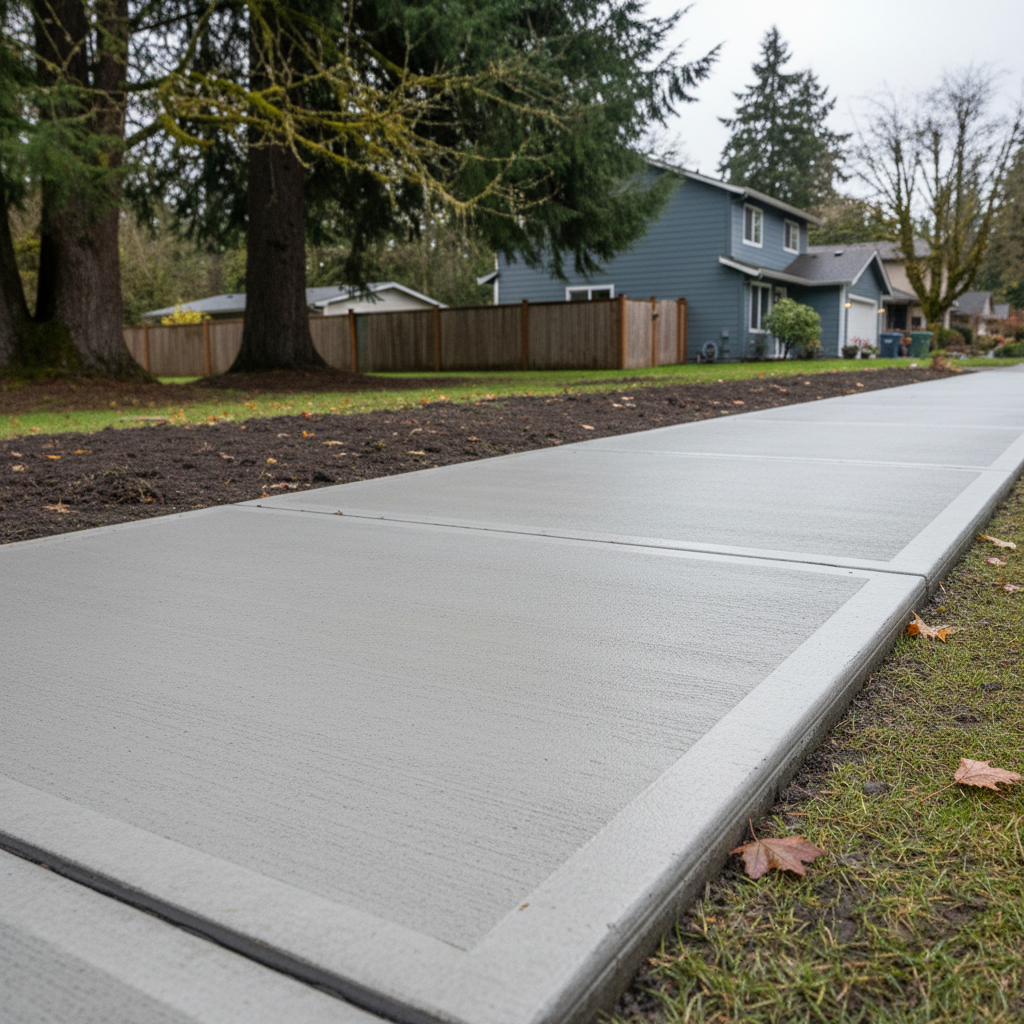
Your concrete sidewalks take a beating, don't they? Rain, sun, kids on bikes, delivery drivers – they're constantly under stress. As a contractor who's poured and repaired countless sidewalks around Lynnwood, I get a lot of the same questions. So, I figured I'd lay out some straight answers for you.
Why do my sidewalks crack, and are all cracks bad?
Cracks are almost inevitable with concrete, especially up here in the Pacific Northwest. We've got that freeze-thaw cycle, which is a big culprit. Water seeps into tiny pores in the concrete, freezes, expands, and then thaws, leaving a bigger void. Do that enough times, and you've got a crack. Tree roots are another major offender, especially in some of the older neighborhoods around Scriber Lake where you've got mature maples and cedars. Poor sub-base preparation when the concrete was first poured can also lead to settling and cracking. Not all cracks are bad, though. Hairline cracks, often called craze cracking, are usually just cosmetic and don't affect the structural integrity. If you see a crack that's wider than a quarter-inch, or if one side of the crack is significantly higher than the other, that's when you need to pay attention. Those can be tripping hazards and indicate a more serious underlying issue.
How long should a concrete sidewalk last in Lynnwood?
A well-installed concrete sidewalk, properly maintained, should easily last 20 to 30 years, sometimes even longer. I've seen some sidewalks around here that are pushing 40 years. The lifespan really depends on a few things: the quality of the concrete mix, the preparation of the ground underneath, proper drainage, and how much traffic it sees. If it was poured on unstable soil or without proper expansion joints, it's not going to last as long. Regular sealing can also extend its life by protecting it from moisture and chemicals.
What's the deal with those control joints? Should I worry if they're cracking?
Control joints, or expansion joints, are those lines you see cut or placed in the concrete. They're there on purpose! Concrete expands and contracts with temperature changes. These joints give the concrete a place to crack in a controlled, straight line, rather than randomly across the slab. If you see a crack running right along a control joint, that's exactly what it's designed to do. It's not a sign of failure; it's a sign that the joint is doing its job. If the concrete is cracking *between* the control joints, that might indicate a problem, like the joints were spaced too far apart or the concrete cured too quickly.
Can I just patch a cracked or spalled sidewalk, or do I need to replace it?
It depends on the damage. For small, isolated cracks or minor spalling (where the surface flakes off), patching can be a good, cost-effective solution. There are good quality patching compounds out there that can fill cracks and resurface small areas. However, if you've got widespread cracking, significant heaving, or large sections of crumbling concrete, patching is just a temporary fix. You'll be throwing good money after bad. In those cases, full replacement of that section or even the entire sidewalk is usually the more durable and ultimately more economical option. We'll always give you an honest assessment at Guardian Concrete Solutions to help you decide.
What causes my sidewalk to sink or become uneven?
Uneven or sinking sidewalks are usually a sign of issues with the sub-base. Erosion from rainwater can wash away the soil underneath, creating voids. Tree roots can grow and push sections of the sidewalk up, or when a tree is removed, the roots decay, and the ground settles. Poor compaction of the soil before the concrete was poured is another common reason. Here in Lynnwood, with our clay-heavy soils in some areas, if the drainage isn't right, water can sit and soften the subgrade, leading to settlement. This isn't just an eyesore; it's a major tripping hazard, and you definitely want to get it addressed.
How often should I clean and seal my concrete sidewalks?
Cleaning your sidewalks regularly is a good idea. A good pressure washing once a year will remove dirt, moss, and algae that can make the surface slippery and degrade the concrete over time. As for sealing, I recommend sealing your concrete sidewalks every 2-5 years. A good quality penetrating sealer will protect the concrete from moisture, oil stains, and the freeze-thaw cycle we talked about earlier. It's a relatively small investment that can significantly extend the life and appearance of your sidewalks. Just make sure the concrete is completely clean and dry before you apply the sealer.
Hopefully, this clears up some of those nagging questions you've had about your Lynnwood sidewalks. If you've got a specific problem or just want an expert eye to look things over, don't hesitate to give us a call.