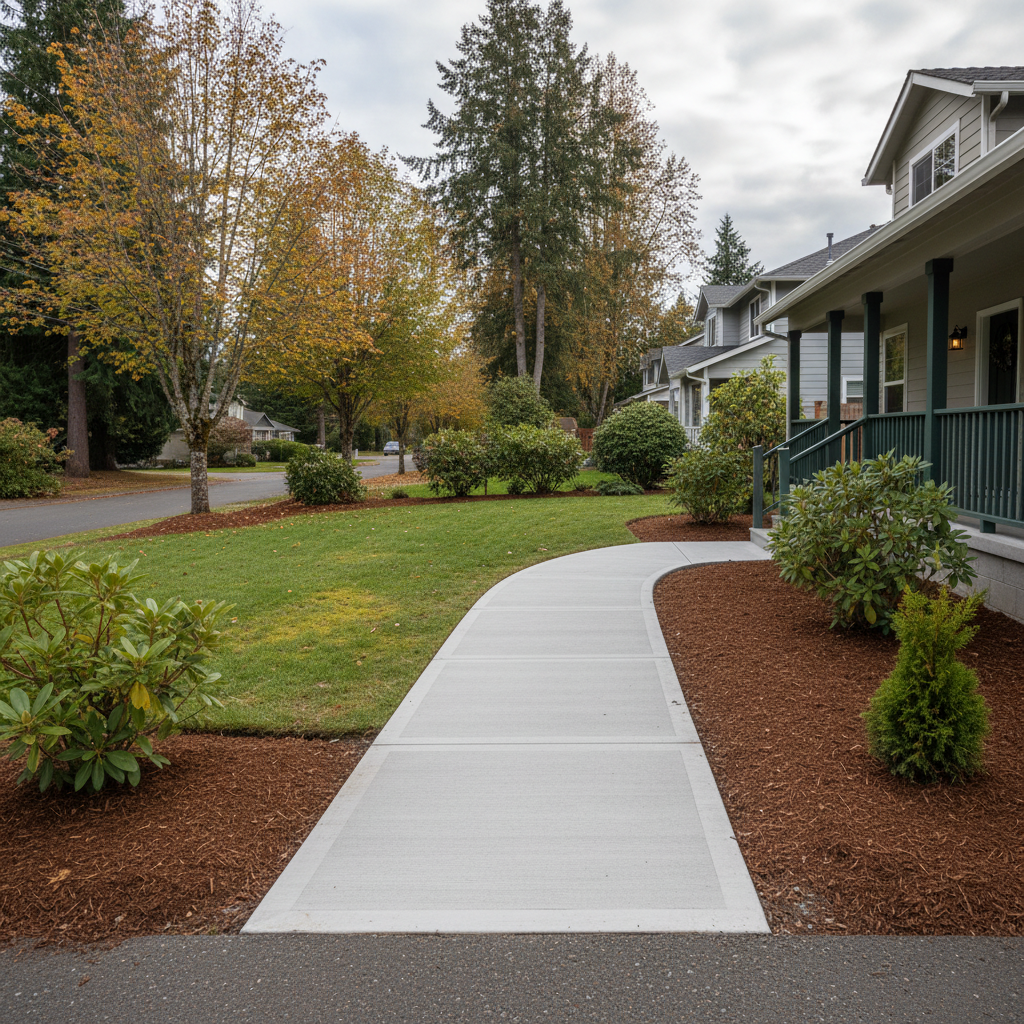
When's the best time to pour a new concrete sidewalk here in Lynnwood? That's a question I get a lot, and it's a good one. You see, concrete isn't like painting a wall; the weather plays a huge role in how it sets, cures, and ultimately, how long it lasts. Getting the timing right can make all the difference for your investment.
Understanding Lynnwood's Climate and Your Concrete
We live in the Pacific Northwest, right? That means we get a lot of rain, mild winters, and often, a pretty short, dry summer. This climate has a direct impact on concrete. For new pours, extreme heat or cold can cause problems. If it's too hot, the water in the mix evaporates too quickly, leading to a weaker slab and more cracking. If it's too cold, the concrete takes forever to cure, and if it freezes before it's strong enough, you're looking at serious damage.
Think about the typical weather we get around here. Those long, wet stretches from fall through spring? Not ideal for pouring. The ground stays saturated, and while we can work with it, it adds complications. You want the ground to be stable and not waterlogged when you're laying down a new sidewalk. Plus, if it rains heavily right after a pour, it can wash away the surface paste, weakening the top layer and making it more susceptible to wear.
The Best Time to Schedule New Concrete Work
So, when is the sweet spot? Generally, I tell folks that late spring through early fall is your best bet for new concrete work in Lynnwood. We're talking May, June, July, August, and maybe early September. During these months, temperatures are usually moderate – not too hot, not too cold – and we tend to have longer dry spells. This gives the concrete the ideal conditions to cure slowly and gain maximum strength.
- Spring (Late April - June): The ground is drying out from winter rains, and temperatures are consistently above freezing. It's a great window before the summer rush.
- Summer (July - August): Often the driest and warmest time. We just have to be mindful of those occasional heatwaves. If it's going to be really hot, we'll take extra precautions like misting or using curing compounds to slow down the drying process.
- Early Fall (September): Still usually good, but you're starting to gamble a bit with the return of the heavy rains. If we get a nice, dry September, it's perfect.
What about winter? Can you pour concrete in December or January? Technically, yes, with special cold-weather admixtures and careful planning to protect the concrete from freezing. But it's more expensive, riskier, and generally not something I recommend for residential sidewalks unless it's an absolute emergency. It's just not worth the headache for most homeowners.
Protecting Your Concrete Investment Year-Round
Once your sidewalk is in, your job isn't over. You've made a significant investment, and you want it to last. Here's what you can do:
- Sealing is Key: I can't stress this enough. A good quality concrete sealer is your first line of defense against our Lynnwood weather. It repels water, prevents de-icing salts from penetrating, and protects against stains. You should plan to reseal every 2-5 years, depending on the sealer type and traffic.
- Mind the Moss and Algae: Our damp climate is a haven for moss and algae, especially in shaded areas like under big fir trees in a typical Lynnwood neighborhood. These growths don't just look bad; they hold moisture against the concrete surface and can make it slippery. Clean your sidewalks regularly with a stiff brush and a mild detergent or a pressure washer. Just be careful with high pressure; too much can damage the surface.
- Avoid De-Icing Salts: When we do get ice, resist the urge to dump rock salt on your concrete. Many de-icing salts, especially those containing ammonium nitrate or ammonium sulfate, can cause significant damage to concrete surfaces, leading to spalling or pitting. Use sand for traction, or look for concrete-safe de-icers like calcium chloride or magnesium acetate, but even these should be used sparingly.
- Watch for Drainage Issues: If you notice puddles forming on or near your sidewalk, address them. Poor drainage means water is sitting on your concrete longer, increasing the risk of freeze-thaw damage and moss growth. Sometimes it's as simple as clearing a clogged downspout.
- Address Cracks Promptly: Small cracks are normal; concrete moves. But if you see cracks growing or developing into trip hazards, don't ignore them. Water can get into those cracks, freeze, expand, and make the problem much worse. A professional repair from a company like Guardian Concrete Solutions can prevent a small issue from becoming a major replacement job.
Taking a little time each season to inspect and maintain your concrete sidewalks will pay off big time in the long run. It's all about working with our climate, not against it, to keep your property looking great and safe for years to come.