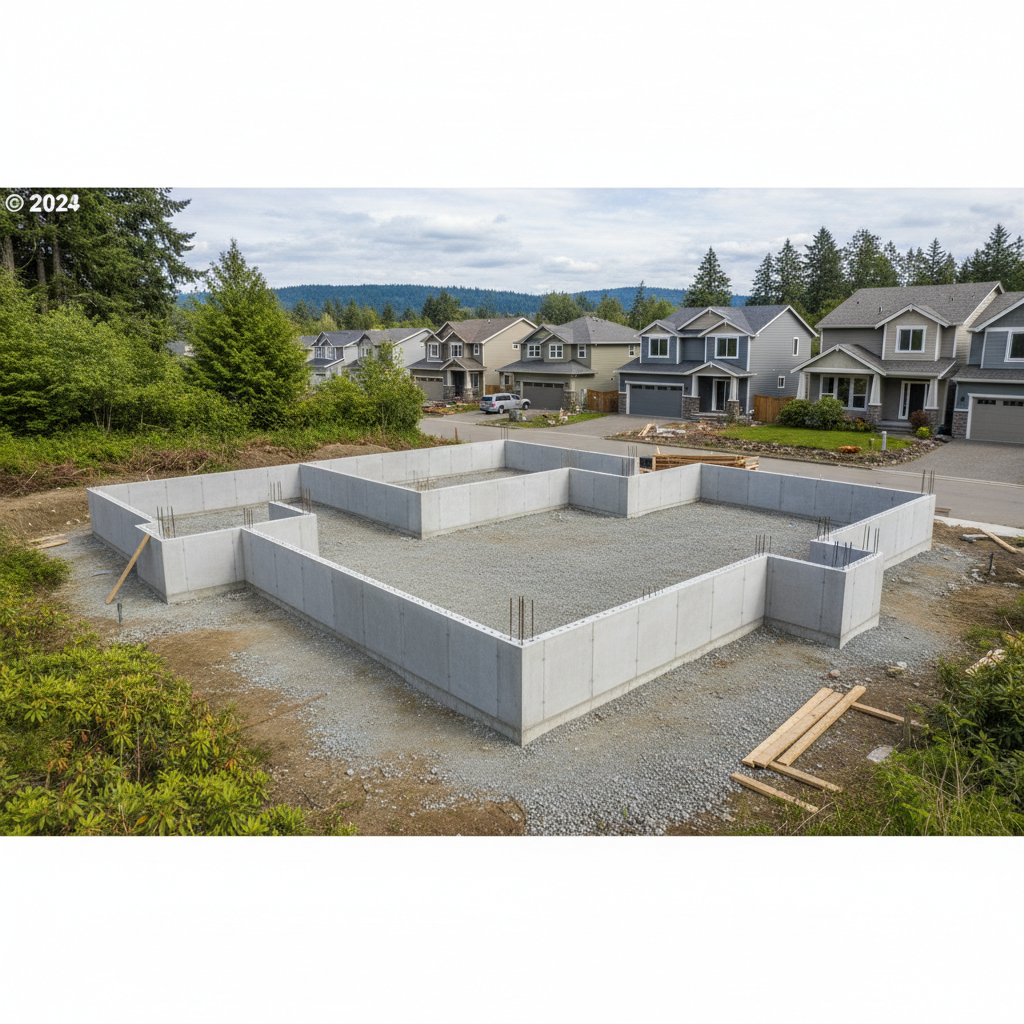
Ever wonder what's really holding up your house? It's the concrete foundation, plain and simple. And around here in Lynnwood, foundations face some pretty unique challenges. I've been working on concrete for years, and I've seen firsthand what our local conditions do to these essential structures.
Our Lynnwood Soil & Weather: A Foundation's Worst Enemy?
You know how we get those long, wet winters? All that rain doesn't just make our lawns green; it soaks right into the ground. A lot of Lynnwood, especially areas around Scriber Lake or the older neighborhoods near Highway 99, has pretty clay-heavy soil. Clay expands when it gets wet, then shrinks when it dries out. This constant movement — we call it 'expansive soil' — puts a real strain on foundations. It's like your house is constantly doing a slow, subtle dance on shifting ground, you know?
Then there's the freeze-thaw cycle. It doesn't happen as much as in colder climates, sure, but we definitely get those cold snaps where the ground freezes a few inches deep, then thaws. Water sneaks into tiny cracks, freezes, expands, and makes those cracks bigger. It's a slow process, but over decades, it really takes its toll.
Common Foundation Issues I See Around Here
Given our soil and weather, there are a few things I regularly encounter when I'm called out to look at foundations in Lynnwood:
- Settlement Cracks: These are pretty common. You might spot diagonal cracks in your basement walls or even on the exterior foundation. Sometimes it's just normal settling, but sometimes it points to uneven soil movement.
- Water Intrusion: That constant rain? It's always trying to find a way in. If your foundation isn't properly sealed, or if your drainage is off, you'll see dampness, efflorescence (that white powdery stuff), or even standing water in your crawl space or basement.
- Bowing Walls: This is a more serious one. If the pressure from the outside soil is too much, especially with that expansive clay, your basement walls can start to bow inwards. You definitely don't want to ignore that.
- Parging Damage: That thin layer of concrete or mortar on the outside of your foundation? It's called parging. It protects the actual foundation. I often see it crumbling or flaking off due to moisture or age. It's not structural, but it's a sign that the foundation underneath might be exposed to the elements.
Why Local Expertise Isn't Just a Buzzword
You might think concrete is concrete, no matter where you are. But that's just not true when it comes to foundations. Knowing the local geology, the typical building practices from different eras in Lynnwood, and our specific weather patterns makes a huge difference.
For example, a house built in the 60s near Alderwood Mall might have a totally different foundation style and materials than a newer build up by Martha Lake. We know what to look for, what's common, and what's a red flag for homes in different parts of town. We're not just looking at the crack; we're considering the whole picture: the age of the house, the surrounding landscape, the drainage, and what the ground underneath is probably doing.
When you're dealing with the very thing that holds your home up, you don't want guesswork. You want someone who's seen it all in your neighborhood, someone who understands the nuances of Lynnwood's specific challenges. That's what we bring to the table at Guardian Concrete Solutions. We're not just pouring concrete; we're building and repairing the stability of your home, with a deep understanding of what it takes to last right here in the Pacific Northwest.
So, if you're seeing signs of foundation trouble, don't wait. Get it checked out by someone who knows our local ground, literally.