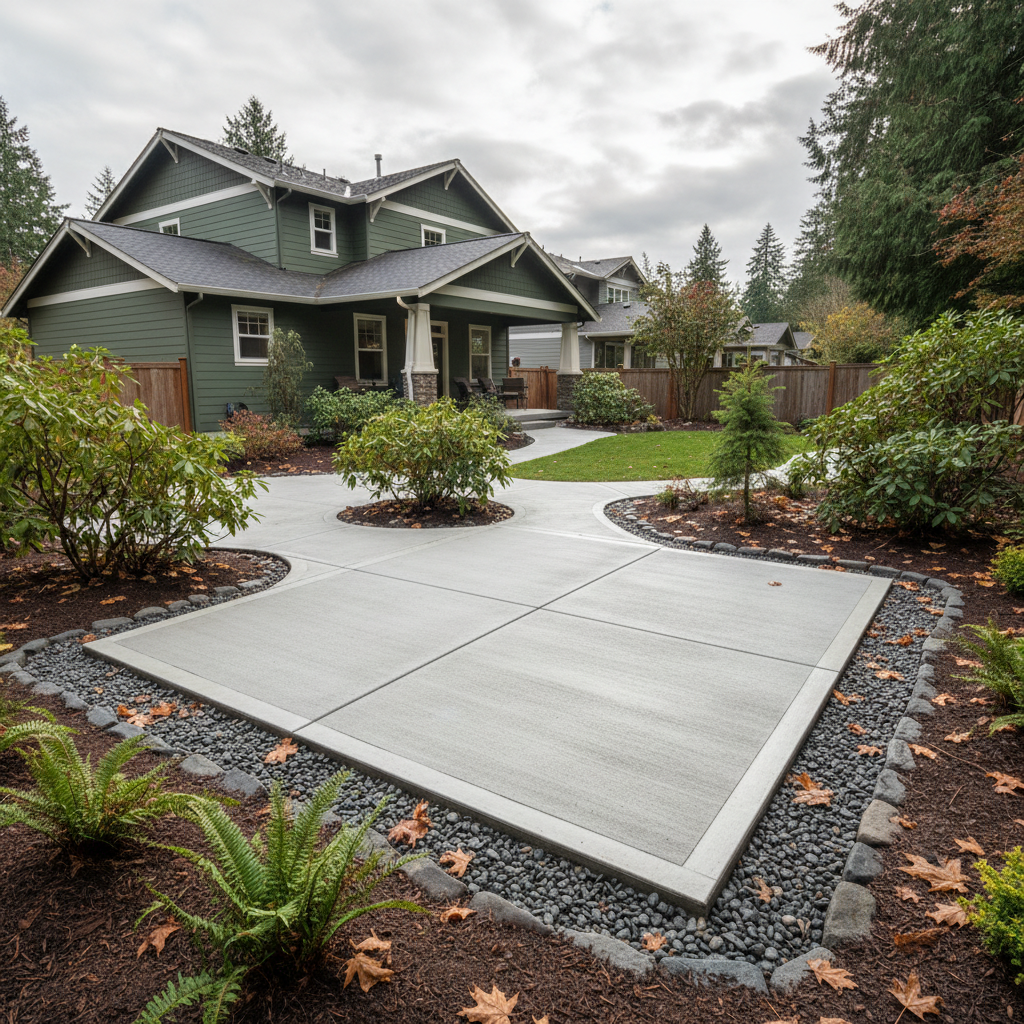
When's the best time to pour concrete around here? That's a question I hear a lot, and for good reason. Our Lynnwood weather isn't exactly predictable, is it? One day you're enjoying 70-degree sunshine, the next it's a cold drizzle. That kind of up-and-down weather really affects concrete, especially when you're talking about driveways, patios, or pathways.
Why Lynnwood's Weather Really Matters for Concrete
You might think concrete's tough, and it is, but it's also pretty sensitive during those first few days after we pour it. Temperature and moisture are the big players here. If it gets too hot, the water in the mix evaporates way too fast, and then you get cracking. Too cold, and it takes forever to cure, or worse, it freezes before it gets strong enough, which can ruin the whole job.
Here in Lynnwood, we've got a few things going against us. First, there's that constant dampness. Even when it's not actively raining, the air often holds a lot of moisture. Then there's the freeze-thaw cycle, especially in places like the hilly areas near Scriber Lake where water can sit. Water gets into tiny cracks, freezes, expands, and then thaws, leaving bigger cracks. It's a real headache for concrete, and it's exactly why proper installation and good timing are so crucial.
The Best (and Worst) Times to Schedule Your Project
So, when should you actually plan your concrete flatwork? Generally, I tell folks to aim for late spring, summer, or early fall. That's our sweet spot, no doubt.
- Late Spring (May-June): The ground's usually dried out a bit from winter, and temperatures are pretty consistently above freezing. You'll still get some rain, but it's typically warmer, so concrete can cure properly.
- Summer (July-August): This is prime time. Warm, dry days mean concrete sets up beautifully. You'll still need to keep it damp for proper curing, but you don't have to worry as much about freezing or too much rain washing out the surface.
- Early Fall (September-October): Often still good, but you're playing a bit of a gamble with the rain. If we get a nice, dry stretch, it's perfect. Once those consistent heavy rains and colder temperatures hit in November, it's usually best to hold off.
What about winter? I wouldn't recommend it unless it's absolutely unavoidable and you've got a contractor who really knows cold-weather pours, with all the right equipment and admixtures. It adds a lot of cost and risk, and frankly, it's just not worth it for most residential flatwork.
Weather Conditions During the Pour: What We Watch For
When Guardian Concrete Solutions is on site, we're not just looking at the forecast for the day of the pour; we're checking the next 3-7 days. Here's what we're keeping an eye on:
- Temperature: We want it to be above 40°F and ideally below 85°F. Anything outside that range means we need to take special steps.
- Rain: A light drizzle isn't the end of the world, but heavy rain can ruin a fresh pour. It adds too much water to the surface, which weakens it, or it can even wash away the cement paste. We'll often cover fresh concrete if unexpected rain pops up.
- Wind: Strong winds can dry out the surface too quickly, leading to those annoying plastic shrinkage cracks. We might use windbreaks or apply a curing compound sooner.
- Humidity: Low humidity combined with high temperatures and wind is a recipe for fast drying and cracking.
Sometimes, even with the best planning, the weather turns. That's when experience really counts, right? We've got ways to protect the concrete, like using curing blankets, temporary shelters, or special admixtures to slow down or speed up the set time.
Protecting Your Concrete Investment Year-Round
Once your concrete's in and cured, you're not entirely off the hook. A little maintenance goes a long way, especially with our climate here.
- Sealing: This is probably the most important thing you can do. A good quality sealer applied every 2-5 years (depending on the product and how much traffic it gets) protects against moisture getting in, freeze-thaw damage, and stains. Think of it like sunscreen for your concrete.
- Cleaning: Keep it clean. Moss and algae just love our damp environment. Use a pressure washer on a low setting or a stiff brush with some mild detergent. Don't let organic matter sit on it for too long, as it can trap moisture and break down the surface.
- De-icing Products: Be careful with de-icers in winter. Many contain salts that can be really harsh on concrete, especially newer concrete. Sand is a safer alternative for traction. If you absolutely have to use a de-icer, look for products labeled as concrete-safe.
- Drainage: Make sure water drains away from your concrete flatwork, not towards it. Standing water is concrete's enemy, contributing to spalling and cracking. If you've got standing water issues, it's definitely worth addressing them.
Getting new concrete flatwork is a big investment in your home. By understanding how our unique Lynnwood weather affects it and taking a few proactive steps, you can make sure it lasts for decades. If you've got questions about your specific project or need an assessment, don't hesitate to give us a call.