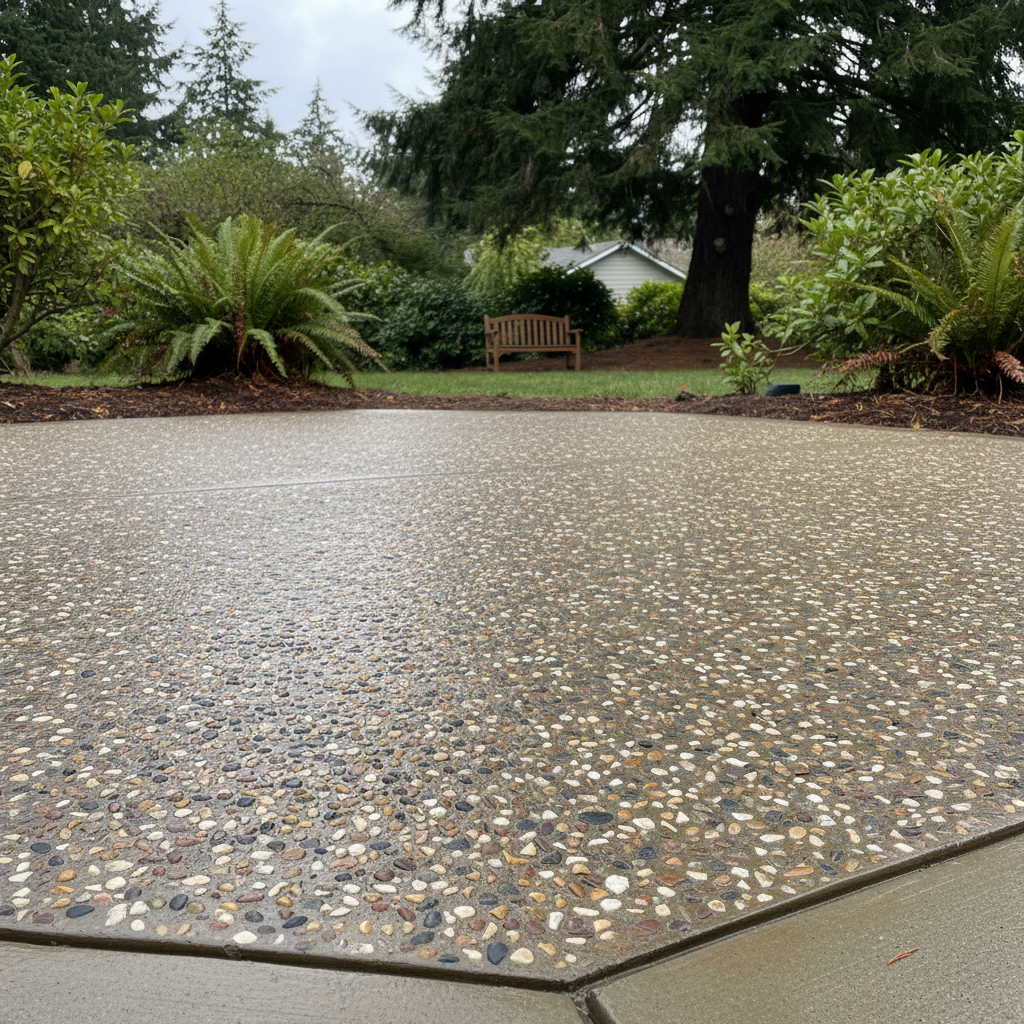
What exactly is decorative concrete, anyway? Isn't it just... concrete?
You're right, it's still concrete at its core, but decorative concrete takes it a few steps further. Think of it like taking a plain canvas and turning it into a piece of art. We're not just pouring a gray slab; we're adding color, texture, and patterns to make it look like something else entirely – brick, flagstone, wood, even natural rock. It's about enhancing the aesthetic appeal of your outdoor (or sometimes indoor) spaces, making them more inviting and unique than just plain old gray concrete.
How long does decorative concrete actually last around here?
That's a big one, and it's a fair question, especially with our Lynnwood weather. Properly installed and maintained decorative concrete, whether it's stamped, stained, or polished, can easily last for decades. We're talking 20, 30, even 40 years. The key is proper installation – good sub-base prep, the right mix, and correct curing. And then, maintenance. You've got to seal it regularly, especially with our wet winters and the occasional freeze-thaw cycles we get. That sealer protects against moisture, UV rays, and general wear and tear. If you neglect the sealing, you'll see it degrade faster, no doubt about it.
Is decorative concrete slippery when it's wet? I'm worried about falls.
That's a very common concern, and it's a good one, especially for folks with kids or older relatives. The truth is, any hard surface can be slippery when wet, but we take steps to minimize that risk with decorative concrete. When we apply a sealer, we can add an anti-slip additive – it's usually a fine grit that mixes into the sealer. It's almost invisible once dry, but it gives the surface a bit more grip. For stamped concrete, the texture itself often provides some natural slip resistance compared to a perfectly smooth, flat surface. So, while you should always be careful on any wet surface, we can definitely make it safer for you.
Can you put decorative concrete over my existing patio or driveway?
Sometimes, yes, but not always. This is where an on-site inspection is crucial. If your existing concrete is in pretty good shape – no major cracks, heaving, or severe spalling – we might be able to apply an overlay. An overlay is a thin layer of polymer-modified concrete that goes right over the old surface, and then we can stamp, color, or texture that. It's a great way to refresh an old slab without the cost and hassle of full demolition. However, if your existing concrete has significant structural issues, like deep, wide cracks or is severely uneven, then an overlay isn't going to fix those underlying problems. In those cases, we'd recommend tearing out the old and pouring new. We'll always give you an honest assessment of what's feasible and what's not.
What kind of maintenance does decorative concrete need?
It's not maintenance-free, but it's pretty low maintenance compared to, say, a wood deck. The main thing is cleaning and resealing. You'll want to clean it periodically – a good sweep, maybe a hose down, and occasionally a mild detergent and a soft brush for tougher spots. Avoid harsh chemicals or high-pressure washers that can damage the surface or strip the sealer. The most important maintenance task is resealing. For most outdoor decorative concrete in our climate, I recommend resealing every 2-3 years. This protects the color, prevents staining, and maintains that slip resistance we talked about. It's not a huge job, and it'll keep your investment looking great for a long time. At Guardian Concrete Solutions, we can even help you out with that if you'd rather not do it yourself.
Will the color fade over time, especially with our cloudy skies and occasional sun?
Color fading is a concern with any outdoor material, but with modern decorative concrete, it's much less of an issue than it used to be. We use high-quality, UV-resistant pigments that are mixed into the concrete itself or applied as stains that penetrate the surface. The sealer also plays a huge role here; it acts as a protective barrier against UV rays, which are the main culprit for fading. Even with our often-cloudy Lynnwood skies, UV still gets through. As long as you keep up with that regular resealing, your decorative concrete's color should remain vibrant for many, many years. You might see a very slight mellowing over decades, but it won't be a drastic, uneven fade like you sometimes see with other materials.
Is decorative concrete more expensive than other patio or driveway options?
That's a tricky one because it really depends on what you're comparing it to. If you're comparing it to a basic, plain gray concrete slab, then yes, decorative concrete will be more expensive due to the added labor, materials (colors, stamps, sealers), and specialized skills involved. However, if you compare it to natural stone pavers, brick, or certain types of high-end decking, decorative concrete can often be more cost-effective upfront and over its lifespan. It offers the look of those more expensive materials without the same price tag or the maintenance headaches (like weeds growing between pavers). It's a fantastic value when you consider its durability, aesthetic appeal, and relatively low maintenance.