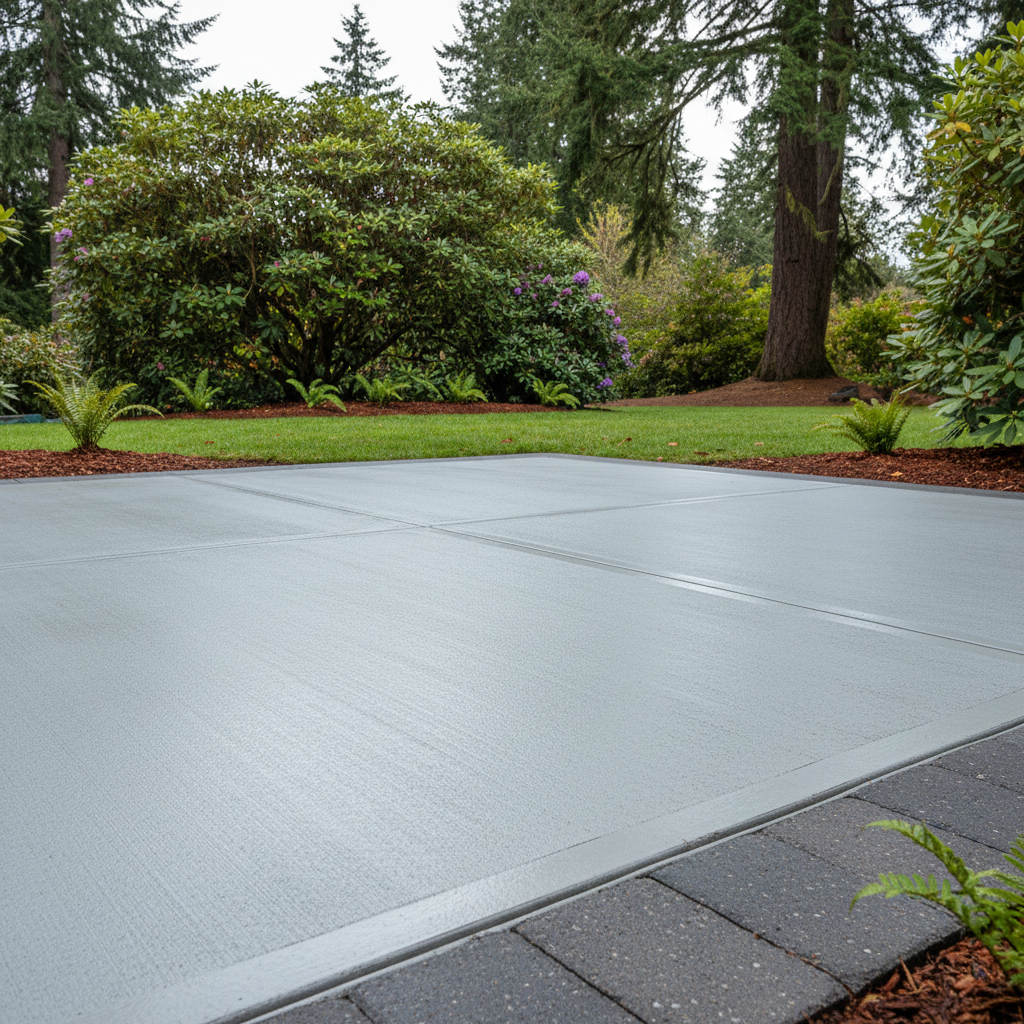
Alright, let's talk concrete patios. I get a lot of questions from folks around Lynnwood about these, and it's no wonder. A good patio can totally transform your backyard, but you want to make sure you're making the right choices. I'm not here to sell you anything; I just want to give you the straight scoop based on what I've seen working in this area for years. Here are the most common questions I hear, and my honest answers.
How much does a concrete patio really cost?
This is always the first question, and it's a fair one. Look, there's no single price tag because every job is different. What I can tell you is that it's generally priced by the square foot, but that base rate can swing quite a bit depending on a few things. Are we talking about a simple, broom-finish slab, or are you looking for something fancy like stamped concrete that mimics stone or brick? Stamping adds labor and materials, so it's going to cost more. Access to your yard plays a huge role too. If we can get a concrete truck right up to the spot, that's one thing. If we're wheelbarrowing concrete through a narrow side yard because your house is on a tight lot like many older homes in the Lake Serene area, well, that's more work, and it'll affect the price. Drainage, site prep, and any demolition of an old patio also factor in. Just to give you a ballpark, for a basic broom-finish patio, you're usually looking at somewhere between $8 to $15 per square foot. For something more decorative, like stamped or exposed aggregate, that can jump to $15 to $30+ per square foot. The best way to know for sure is to get a detailed quote after I've seen the site.
How long will a concrete patio last in our Lynnwood weather?
If it's installed right, a concrete patio should last you decades, easily 20 to 30 years, maybe even more. Our weather here in Lynnwood, with its wet winters and occasional freezes, can be tough on concrete if it's not done properly. The key is good site preparation and the right concrete mix. You need proper drainage so water doesn't sit on it and freeze, causing cracks. The sub-base needs to be well-compacted, and the concrete itself needs to be a good quality mix with the right strength and air entrainment to handle freeze-thaw cycles. We also make sure to put in control joints (those cuts you see) at the right intervals. These aren't cracks; they're designed to give the concrete a place to crack predictably when it expands and contracts, keeping your patio looking good. If you skip these steps or go with a cheap, inexperienced crew, you'll see problems a lot sooner.
Does concrete crack? How do you prevent it?
Yes, concrete cracks. It's a fact of life with concrete; it's going to happen. Anyone who tells you otherwise isn't being honest. Concrete shrinks as it dries and cures, and it expands and contracts with temperature changes. Our goal isn't to prevent cracking entirely, but to control where those cracks happen so they're not unsightly or structurally damaging. That's where those control joints I mentioned come in. We saw or tool grooves into the fresh concrete at strategic points. These create weak spots, so when the concrete inevitably cracks, it's encouraged to crack along those lines, keeping it neat and tidy. Proper sub-base preparation, the right concrete mix, and correct placement of rebar or wire mesh also help distribute stresses and minimize random cracking. It's all about good engineering and knowing what you're doing.
Can I put a concrete patio over an existing deck or old patio?
Usually, no, and I strongly advise against it. Trying to pour concrete over an old wooden deck is a recipe for disaster. The deck isn't designed to support that kind of weight, and it'll rot out underneath, leading to major structural failure. For an existing concrete or paver patio, it's sometimes possible, but it's rarely the best solution. You're adding significant weight, which can cause settlement issues if the original base wasn't perfect. You also inherit any existing cracks or drainage problems from the old slab, and those issues will likely telegraph through to your new concrete. Most of the time, it's far better to remove the old structure, prepare a fresh, solid sub-base, and pour new concrete. It costs a bit more upfront for demolition, but you'll save yourself a lot of headaches and potential repair costs down the road.
What kind of maintenance does a concrete patio need?
Concrete patios are pretty low maintenance, which is one of their big selling points. The main thing you'll want to do is keep it clean. A good sweep to remove leaves and dirt, and an occasional wash with a hose and maybe a mild detergent for tougher spots, is usually all it takes. For stamped or colored concrete, I always recommend sealing it every few years. The sealer protects the surface from stains, enhances the color, and helps it resist our Pacific Northwest moss and algae growth. It also helps protect against surface damage from freeze-thaw cycles. For Guardian Concrete Solutions, we always make sure to give you specific sealing recommendations based on the finish you choose. Beyond that, just keep an eye out for any standing water issues or significant cracks that might develop over time, though with a proper installation, those should be minimal.
How long does it take to install a concrete patio?
The actual pouring and finishing of a concrete patio usually happens in one day. However, the whole process takes a bit longer. First, there's the site preparation: clearing the area, excavating, grading for drainage, and laying down and compacting the sub-base. That can take anywhere from a day to several days, depending on the size and complexity of the job. Then comes the forming and reinforcement. Once the concrete is poured, it needs time to cure. You can usually walk on it lightly after 24-48 hours, but you'll want to keep heavy furniture or vehicles off it for at least 7 days, and ideally 28 days for it to reach its full strength. So, from start to finish, you're looking at anywhere from a few days to a couple of weeks, depending on the project's scale and any decorative finishes that require more intricate work or drying time.